

Curriculum for Lambing Experience visits
Curriculum map, links, learning and more
Learning Experiences
During their visit, learners can:
- Observe lambs at different ages and stages
- Learn how farmers care for pregnant ewes and newborn lambs
- Listen, ask questions, and use real farming vocabulary
- Take part in feeding or safe handling (optional)
- Notice farm tools, technology, and equipment
- Explore the environment, buildings, and routines of a working farm
- Reflect on caring for living things
| Learning Experience | CfE Area |
|---|---|
| Observing lambing & life cycles | Sciences, HWB |
| Listening, talking & asking questions | Literacy, HWB |
| Handling / feeding lambs | HWB, Sciences |
| Exploring tools and equipment | Technologies |
| Moving around the farm environment | HWB, Outdoor Learning |
| Understanding farming in the community | Social Studies |
These experiences support curiosity, confidence, communication, and connection with nature.
PART 1: Learning Time in Bissett’s Barn
In Bissett’s Barn, learners explore key ideas that help them make sense of what they will see in the lambing shed. This usually includes:
- Sheep vocabulary: ewe (yowe), tup (ram), lamb, hogg, gimmer — and why we say sheep, not sheeps.
- Lamb development: birth weights, and how lambs can stand within minutes of being born.
- Colostrum: what it is and why it matters for newborn health.
- Sheep breeds: noticing wool type, colours, and whether sheep have horns.
- Farm jobs: the many roles involved in caring for animals and producing food.
- Food journey: how farms play a key part in Scotland’s food system.
- Predators: which animals can pose a risk to lambs.
- Shepherd’s crook: what it’s made of, how it works, and why it’s such an important tool.
This session builds children’s vocabulary, confidence and background knowledge before we head to the shed.
PART 2: Visit to the Lambing Shed
In the lambing shed, learners experience real‑world farming first‑hand. This part of the visit often includes:
- Hearing the sounds of a busy sheep shed — bleating, movement, feeding.
- Walking through the shed to see the ewes and lambs, noticing pen colours, numbers, and markings.
- Learning about feeding: how single, twin and triplet lambs need different nutrition.
- Caring for sheep: warmth, bedding, water, quiet spaces and routine checks.
- Hay vs straw: what each is used for, and what a hay‑heck is.
- Common illnesses in young lambs, and how farmers work to prevent them.
- Heat lamps: why newborns need extra warmth.
- How a lamb is born: an age‑appropriate explanation of lambing.
- Bottle‑feeding a lamb (if appropriate), and why lambs can’t burp.
- Holding a lamb and feeling its heartbeat.
- Watching older lambs jump and play, seeing growing confidence and natural behaviours.
Note: Additional Topics
We are always happy to answer questions, but we only cover extra topics if they naturally arise or are requested.
If there is something specific you would like us to discuss, please prepare your learners to ask about it — or feel free to ask directly during the visit.
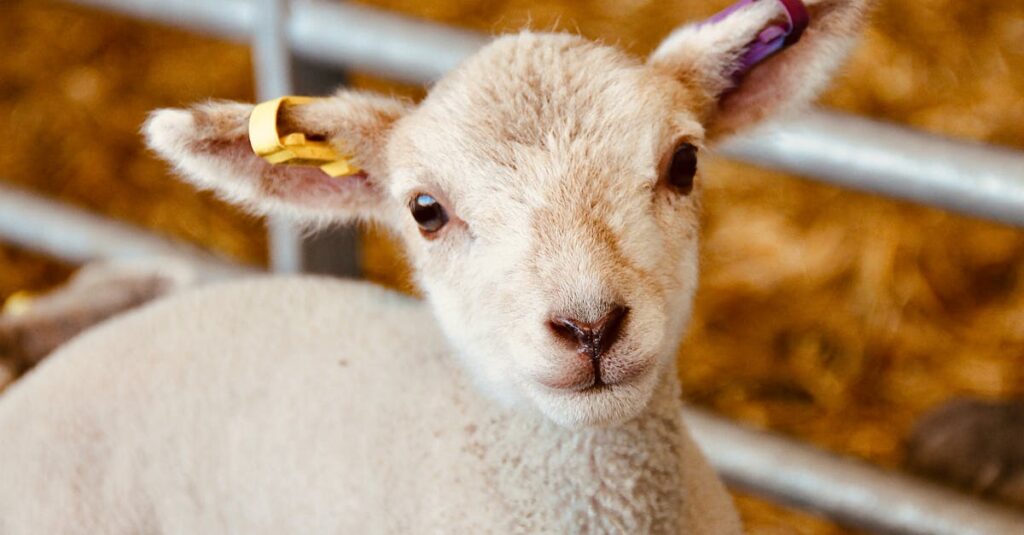
Early Level (Nursery – P1)
| Sciences SCN 0‑01a – Observes real animals and explores how living things grow and are cared for. SCN 0‑10a – Developing awareness of care needs of living things | Literacy Across Learning LIT 0‑07a / LIT 0‑09a – Listening, asking questions, sharing ideas LIT 0‑04a – Asks simple questions and shares observations about animals and equipment. |
| Health & Wellbeing – Food & Health HWB 0‑30a – Food origins and choices HWB 0‑05a – Hygiene and safety HWB 0‑16a – Safe practices around food/animals HWB 0‑33a – Follows simple safety and hygiene rules during the lambing visit. | Numeracy & Mathematics MNU 0‑01a – Comparing quantities – which ewes have more than one lamb MNU 0‑02a – Counting MNU 0‑20a – Data handling (early tallies) |
| Social Studies SOC 0‑07a – Exploring the local environment | Technologies TCH 0‑10a – Explores simple tools and equipment used for animal care. |
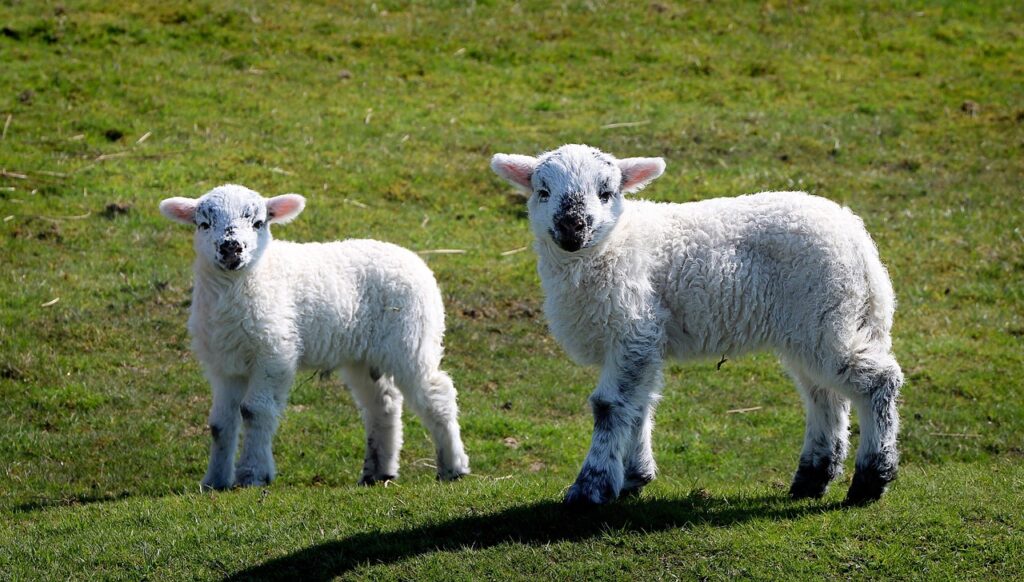
First Level (P2–P4)
| Sciences SCN 1‑02a – Body systems & growth SCN 1‑03a – Understanding inheritance & genetics (introductory) SCN 1‑12a – Food sources & care for living things | Literacy Across Learning LIT 1‑05a / LIT 1‑06a – Listening, note‑taking, retelling |
| Health & Wellbeing – Food & Health HWB 1‑30a – Where food comes from; health/hygiene | Numeracy & Mathematics MNU 1‑02a – Counting & comparing MNU 1‑20a – Organising & displaying data MNU 1‑12a – Estimation MTH 1‑11a – Measuring MNU 1‑08b – Time (sequencing / daily routines) |
| Social Studies SOC 1‑20a – Land use SOC 1‑07a – How local environment meets needs | Technologies TCH 1‑04b – Describes how equipment (heat lamps, bottles, pens) helps farmers do their jobs. |
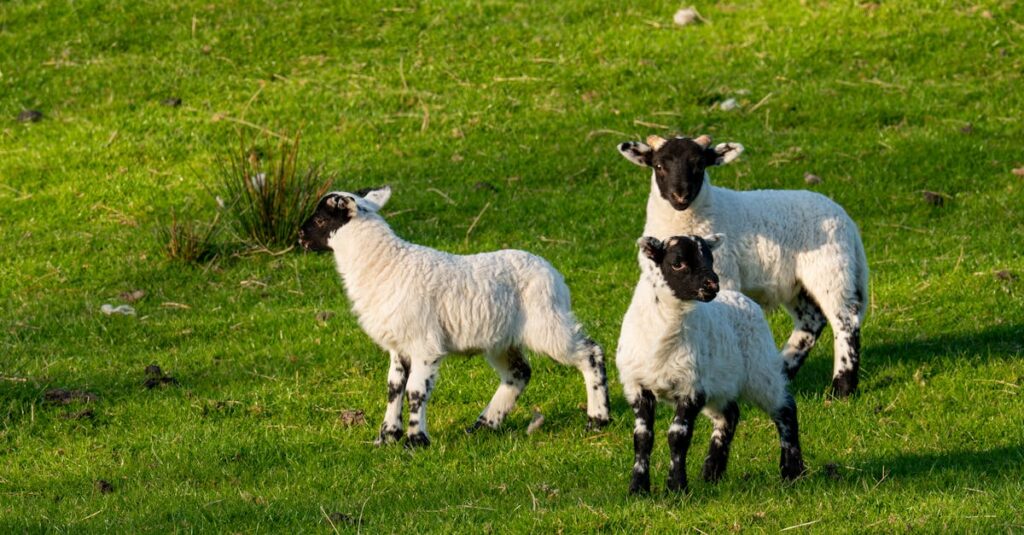
Second Level (P5–P7)
| Sciences SCN 2‑01a – Reproduction SCN 2‑03a – Growth and survival SCN 2‑12a – Sustainability & food SCN 2‑20a – Topical science & welfare | Literacy Across Learning LIT 2‑05a / 2‑06a / 2‑10a – Questioning, summarising, structured explanation |
| Health & Wellbeing – Food & Health HWB 2‑30a – Nutrition, hygiene, safety in food contexts | Numeracy & Mathematics MNU 2‑20a – Collect, organise, present data MTH 2‑21a – Interpret graphs & tables MNU 2‑11a – Measurement MNU 2‑07a – Problem solving with number |
| Social Studies SOC 2‑20a – Economic activity & land use SOC 2‑22a – Ethical & environmental considerations | Technologies TCH 2‑13a – Evaluates design features of lambing pens and equipment for safety and efficiency. |
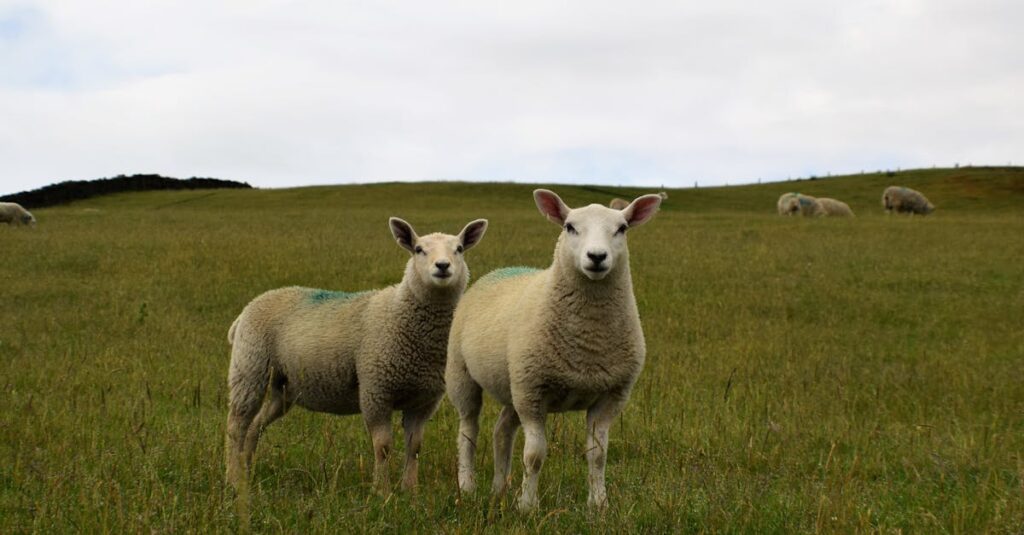
Third Level (S1–S3)
| Sciences SCN 3‑03a – Sexual & asexual reproduction SCN 3‑01a – Biological systems and survival SCN 3‑12a – Sustainability & food production systems | Literacy Across Learning LIT 3‑09a – Presenting & discussing findings LIT 3‑28a – Communicating in extended formats (reports/talks) |
| Health & Wellbeing – Food & Health HWB 3‑30a – Ethical food production, sustainability, nutrition | Numeracy & Mathematics MNU 3‑20a – Sampling & reliability MNU 3‑11a – Scale & measurement MTH 3‑21a – Statistical interpretation MNU 3‑07a – Proportionality / ratios MNU 3‑22a – Risk & uncertainty |
| Social Studies SOC 3‑20a – Global food security & resource use SOC 3‑22a – Socio‑economic arguments in land use & food systems | Technologies TCH 3‑13a – Analyses systems (lighting, layout, water, feeding) and suggests improvements. |
Dowloadable Documents for planning
These will all be available soon – some are still in production!
Fully Detailed Files
Excel and PDF format
Contains all experiences and outcomes for each level mapped to elements of your visit to Ring Farm, allowing you to search for what you need.
Possible Content
A full and detailed document of all the content we could potentially cover. You can use this to help plan questions your learners might want to ask. This is not a document for the learners themselves.
Summary of Learning with Es&Os
A word copy of the information above including: learning experiences, what we learn and links to curriculum for excellence
ASN Milestones
Includes our Ring Farm experience mapped against the milestones for pre-early learning.
Extension activities
These are suggested games and activities you can do while you have extra time in Bissett’s Barn after the sheep shed visit is finished. We can provide resources to use.
Longer term learning and links (post-visit)
Activities ideas and learning you might want to engage with in the classroom or at home once the visit is over.